

What is ADHD?
ADHD is a neurodevelopmental condition that affects attention, executive functioning, motivation, and self-regulation. It is not simply a problem with paying attention—it affects how the brain organizes, prioritizes, initiates, and completes tasks.
Many people with ADHD have developed effective ways to compensate for years. As life becomes more demanding, those strategies may no longer be enough, making symptoms more noticeable at school, work, home, or during periods of significant life change.
Because ADHD can overlap with other medical, psychological, and learning conditions, a comprehensive assessment is essential to ensure the diagnosis, and recommendations, are accurate.
Could I, or my loved one have ADHD?
Many people begin wondering about ADHD after years of feeling that life requires more effort than it seems to for everyone else. Others have always managed well until increasing responsibilities, higher education, workplace demands, parenting, or hormonal changes make long-standing difficulties much harder to compensate for.
ADHD can look different across people and across the lifespan. Difficulties with attention, organization, time management, emotional regulation, motivation, or follow-through can also be caused by anxiety, depression, trauma, sleep disorders, learning differences, medical conditions, or hormonal changes.
A comprehensive assessment helps determine not only whether ADHD is present, but why these difficulties are occurring and what the most appropriate recommendations are.
What is involved in an assessment?
Every assessment begins with understanding you, not just your symptoms. Before testing begins, we carefully review your developmental history, current concerns, medical and mental health history, education or work experiences, and any information you have already provided. This allows us to determine which assessment measures are most appropriate for your unique presentation.
Your assessment then combines a detailed diagnostic interview with carefully selected questionnaires, cognitive and executive functioning measures, sensory processing evaluation, and other assessment tools when appropriate. Rather than administering the same battery to everyone, we tailor the assessment to answer the specific clinical questions that matter most.
Finally, all findings are carefully integrated to determine whether ADHD best explains your experiences, or whether another condition, or combination of factors, provides a more accurate explanation. You leave with a comprehensive report, individualized recommendations, and a detailed feedback session to help you understand both the diagnosis and the practical implications for everyday life.
Why Our Assessments Are Different

An ADHD diagnosis should do more than answer a question. It should help you understand yourself more clearly and provide practical guidance for moving forward.
Comprehensive, Not Checklist-Based
We take the time to understand your history, strengths, challenges, and the context in which symptoms occur. ADHD is diagnosed through careful clinical assessment—not by a questionnaire alone.
Looking Beyond ADHD
ADHD rarely exists in isolation, and many conditions can produce similar symptoms. Every assessment carefully considers developmental, psychological, medical, hormonal, learning, and lifestyle factors to determine whether ADHD is the best explanation for your experiences—or whether another condition, or a combination of factors, better accounts for your symptoms.
Rather than focusing solely on whether you meet the criteria for ADHD, we develop a comprehensive understanding of how your unique profile contributes to the challenges you experience. This approach helps ensure that both the diagnosis and the recommendations are accurate, individualized, and clinically meaningful.
Sensory Processing Matters
Many people with ADHD also experience sensory processing differences that influence attention, emotional regulation, executive functioning, sleep, energy, and everyday functioning. Yet these patterns are often overlooked or left unexplored during a standard ADHD assessment.
Every ADHD assessment includes a structured evaluation of sensory processing as part of our comprehensive assessment framework. Understanding how your nervous system responds to sensory information helps us move beyond diagnosis alone to develop practical, individualized recommendations that better support how you learn, work, regulate emotions, and navigate daily life.
Recommendations You Can Actually Use
Your report is designed to be useful. Recommendations are individualized and may include strategies for work, school, daily life, accommodations, treatment options, and next steps.
Designed for Real Life
Whether ADHD is confirmed or another explanation better accounts for your experiences, our goal is for you to leave with clarity, confidence, and practical recommendations that help you move forward.
No two people experience ADHD in exactly the same way, and no two sets of recommendations should be the same. Every recommendation is developed from your unique assessment findings and may include executive functioning strategies, sensory-based interventions, accommodations, environmental modifications, physician guidance, treatment recommendations, and practical supports tailored to your strengths, challenges, goals, and everyday life. Every recommendation is linked directly to your assessment findings, helping you understand not only what to do, but why it is likely to be helpful for you.
Assessment Process
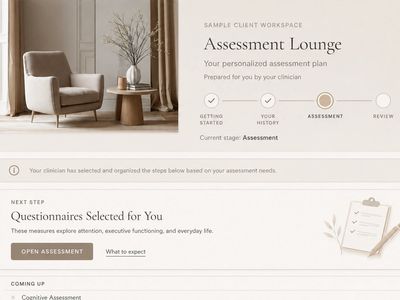
Your Assessment Lounge: Everything in One Place
A comprehensive ADHD assessment involves several forms, measures, and steps, but the process itself should not feel overwhelming. We designed and developed the Assessment Lounge to bring each client’s forms, testing links, handouts, information requests, and guidance into one calm, list-based workspace prepared by their clinician. It keeps what needs attention and what comes next visible, reducing the memory, organization, and task-tracking demands of the assessment from beginning to end.
Comprehensive Clinical Interview
A detailed exploration of your developmental history, current concerns, strengths, medical and mental health history, education history, learning experiences, work, and day-to-day functioning as well as your goals for the assessment.
Standardized ADHD Assessment Measures
Evidence-based questionnaires and clinical measures completed by you and, when appropriate, by someone who knows you well in order to provide multiple perspectives.
Assessment of Anxiety and Mood
Anxiety, depression, and other mood-related concerns can resemble ADHD, intensify attention and executive functioning difficulties, or occur alongside it. We assess these areas to clarify what is contributing to current difficulties and whether more than one condition may be present. This supports a more accurate diagnosis and recommendations that address the full clinical picture.
Cognitive & Executive Functioning Evaluation
Professional cognitive assessment battery examining attention, working memory, processing speed, reasoning, and a broad range of executive functions. Multiple standardized, performance-based measures are integrated to develop a detailed neurocognitive profile, identifying strengths, vulnerabilities, and patterns that may help explain difficulties in everyday life.
Sensory Processing Profile
Our adult ADHD assessment includes structured sensory profiling to identify patterns that may influence attention, executive functioning, emotional regulation, sleep, energy, productivity, and daily functioning. Sensory differences are not diagnostic of ADHD, but research indicates that sensory sensitivity, avoidance, seeking, and low registration occur more often in people with ADHD and may help explain why attention and functioning vary across environments and demands. Identifying these patterns allows us to recommend practical supports based on the person’s functional needs, whether or not the assessment results in an ADHD diagnosis.
Clinical Formulation & Differential Diagnosis
Integration of all assessment findings to determine whether ADHD is the best explanation for your experiences, while carefully considering other medical, psychological, developmental, and lifestyle factors.
Personalized Recommendations
Practical recommendations tailored to your unique profile, including executive functioning strategies, accommodations, sensory interventions, environmental modifications, treatment recommendations, and everyday supports.
Comprehensive Assessment Report
A professionally written report that explains your results in clear language, documents the rationale for conclusions, and provides practical individualized recommendations that can be shared with physicians, schools, workplaces, or other professionals when appropriate.
02 | Individualized Assessment Planning

01 Initial Consultation
Your first conversation is with our Treatment Coordinator, who will take the time to understand your concerns, answer your questions, explain the assessment process, and help ensure that a comprehensive ADHD assessment is the right fit for your needs.
02 | Clinical Review & Assessment Planning
Before your assessment begins Corrine Easy carefully reviews your intake information, questionnaires, and background history. Based on this review, she develops an individualized assessment plan and selects the assessment measures most appropriate for your unique presentation.
03 | Comprehensive Assessment
Your assessment includes a comprehensive diagnostic interview, cognitive and executive functioning assessment, standardized ADHD measures, and a sensory processing evaluation. Every component is selected to develop a thorough understanding of your strengths, challenges, and day-to-day functioning.
04 | Clinical Formulation
All assessment findings are carefully integrated to determine whether ADHD is the best explanation for your experiences while considering other psychological, medical, developmental, hormonal, learning, and lifestyle factors. This process forms the foundation for accurate diagnosis and individualized recommendations.
05 | Report Review & Feedback Session
Your comprehensive assessment report is provided during your feedback session. Together, we review the findings in detail, discuss how the conclusions were reached, answer your questions, and ensure you understand not only the diagnosis, but also the recommendations and how to apply them in everyday life. Our goal is for you to leave with a clear understanding of your assessment and confidence in your next steps.

ADHD Assessment Across the Lifespan
ADHD Assessments for Adults
Whether you’ve struggled for years, are finding that increasing responsibilities have become harder to manage, or have recently begun questioning whether ADHD may be contributing to your challenges, we provide comprehensive assessments that help clarify your strengths, understand your difficulties, and guide your next steps.
ADHD Assessments for Adolescents
ADHD can affect learning, organization, emotional regulation, friendships, and confidence. Our assessments help adolescents and their families better understand these challenges while providing practical recommendations to support success at home, at school, and beyond.
ADHD Assessments for Women in Perimenopause & Menopause
Hormonal changes during perimenopause and menopause can significantly affect attention, memory, executive functioning, and emotional regulation. Because these changes can resemble or amplify ADHD symptoms, our assessments carefully consider hormonal influences alongside developmental history and other contributing factors to ensure an accurate and meaningful understanding of your experiences.